To All,
Good Thursday morning September 17 to all. Mostly cloudy and 81 today here in paradise. Already at today’s high with a low this evening of 61.
Regards
Skip
HAGD
NNNNNNNNNNNNNNNNNNNNNNNNNNNNNNNNNNNNNNNNNNNNNN
Chance Vought's F-8 CRUSADER II and III - the Mig Masters
Chance Vought's F-8 CRUSADER II and III - the Mig Masters
NNNNNNNNNNNNNNNNNNNNNNNNNNNNNNNNNNNNNNNNNNNNNN
The Carrier U.S.S Franklin in Action in World War 2 (1945 - Restored)
The Carrier U.S.S Franklin in Action in World War 2 (1945 - Restored)
NNNNNNNNNNNNNNNNNNNNNNNNNNNNNNNNNNNNNNNNNNNNNN
USS Franklin - Surviving a Comet Strike
USS Franklin - Surviving a Comet Strike
NNNNNNNNNNNNNNNNNNNNNNNNNNNNNNNNNNNNNNNNNNNNNN
SAGA OF THE USS FRANKLIN ESSEX CLASS AIRCRAFT CARRIER IN WWII 2093
SAGA OF THE USS FRANKLIN ESSEX CLASS AIRCRAFT CARRIER IN WWII 2093
NNNNNNNNNNNNNNNNNNNNNNNNNNNNNNNNNNNNNNNNNNNNNNN
How Did U.S.S. Franklin Survive the Pacific Hell | World War 2 in Color | US Navy Documentary | 1945
How Did U.S.S. Franklin Survive the Pacific Hell | World War 2 in Color | US Navy Documentary | 1945
NNNNNNNNNNNNNNNNNNNNNNNNNNNNNNNNNNNNNNNNNNNNNNN
Why Japan's Carrier Designers Could Not Explain How American Carriers Launched Twice as Many Planes
Why Japan's Carrier Designers Could Not Explain How American Carriers Launched Twice as Many Planes
NNNNNNNNNNNNNNNNNNNNNNNNNNNNNNNNNNNNNNNNNNNNNNN
Sarah Paine — How Russia sabotaged China's rise
Sarah Paine — How Russia sabotaged China's rise
NNNNNNNNNNNNNNNNNNNNNNNNNNNNNNNNNNNNNNNNNNNNNNNN
Japanese Admiral Wrote FINAL Entry: American Industry Makes Victory Impossible
Japanese Admiral Wrote FINAL Entry: American Industry Makes Victory Impossible
NNNNNNNNNNNNNNNNNNNNNNNNNNNNNNNNNNNNNNNNNNNNNNN
This day in Naval and Marine Corps History (thanks to NHHC)
Here is a link to the NHHC website: https://www.history.navy.mil/. Go here to see the director’s corner for all 92 H-Grams
September. 17
1787 The Continental Convention signs the Constitution of the United States at Philadelphia, Pa., replacing the Articles of the Confederation. Named in honor of the Constitution, USS Constitution is launched in 1797 and to date is the world's oldest commissioned U.S. Navy ship in service.
1852 A party of Marines from USS Jamestown land at Buenos Aires, Argentina, to protect Americans during a revolution. During this time, USS Jamestown serves as part of the Brazil Squadron.
1861 During the Civil War, a landing party from USS Massachusetts takes possession of Ship Island, Miss., forcing the Confederates to evacuate.
1902 Landing parties of Marines and Sailors from the sternwheel gunboat USS Cincinnati go ashore at Coln, Panama (later Colombia) to protect American property during a period of unrest.
1944 The Naval Task Force under Rear Adm. William H. P. Blandy lands Army troops on Angaur, Palau Islands, supported by Navy carrier aircraft from USS Wasp (CV 7)and shore bombardment from USS Tennessee. Two days later, Marines land. On Sept. 20, the island is declared secure.
2011 USNS Spearhead (JHSV 1) is christened and launched at Mobile, Ala. The joint high-speed vessel provides rapid transport of military equipment and personnel in theater.
NNNNNNNNNNNNNNNNNNNNNNNNNNNNNNNNNNNNNNNNNNNNNN
Today in World History September 17
1787 The Constitutional Convention in Philadelphia approves the constitution for the United States of America.
1796 President George Washington delivers his "Farewell Address" to Congress before concluding his second term in office.
1862 The Battle of Antietam in Maryland, the bloodiest day in U.S. history, commences. Fighting in the corn field, Bloody Lane and Burnside's Bridge rages all day as the Union and Confederate armies suffer a combined 26,293 casualties.
1868 The Battle of Beecher's Island begins, in which Major George "Sandy" Forsyth and 50 volunteers hold off 500 Sioux and Cheyenne in eastern Colorado.
1902 U.S. troops are sent to Panama to keep train lines open over the isthmus as Panamanian nationals struggle for independence from Colombia.
1903 Turks destroy the town of Kastoria in Bulgaria, killing 10,000 civilians.
1916 Germany's "Red Baron," Manfred von Richthofen, wins his first aerial combat.
1917 The German Army recaptures the Russian Port of Riga from Russian forces.
1939 With the German army already attacking western Poland, the Soviet Union launches an invasion of eastern Poland.
1942 British Prime Minister Winston Churchill meets with Soviet Premier Josef Stalin in Moscow as the German Army rams into Stalingrad.
1944 British airborne troops parachute into Holland to capture the Arnhem bridge as part of Operation Market-Garden. The plan called for the airborne troops to be relieved by British troops, but they were left stranded and eventually surrendered to the Germans.
1947 James Forestall is sworn in as first the U.S. Secretary of Defense.
1957 The Thai army seizes power in Bangkok.
1959 The X-15 rocket plane makes its first flight.
1962 The first federal suit to end public school segregation is filed by the U.S. Justice Department.
1976 The Space Shuttle is unveiled to the public.
1978 Egypt and Israel sign the Camp David Accords.
1980 Nationwide independent trade union Solidarity established in Poland.
1983 Vanessa Williams becomes the first black Miss America; relinquished crown early after scandal over nude photos.
2001 The New York Stock Exchange reopens for the first time since the September 11 terrorist attacks on the Twin Towers; longest period of closure since the Great Depression of the 1930s.
2006 Alaska's Fourpeaked Mountain erupts for the first time in at least 10,000 years.
2011 Occupy Wall Street movement calling for greater social and economic equality begins in New York City's Zuccotti Park, coining the phrase "We are the 99%."
nnnnnnnnnnnnnnnnnnnnnnnnnnnnnnnnnnn
1862 Battle of Antietam breaks out
Beginning early on the morning of September 17, 1862, Confederate and Union troops in the Civil War clash near Maryland’s Antietam Creek in the bloodiest single day in American military history.
The Battle of Antietam marked the culmination of Confederate General Robert E. Lee’s first invasion of the Northern states. Guiding his Army of Northern Virginia across the Potomac River in early September 1862, the general daringly divided his men, sending half of them, under the command of General Thomas “Stonewall” Jackson, to capture the Union garrison at Harper’s Ferry.
President Abraham Lincoln put Major General George B. McClellan in charge of the Union troops responsible for defending Washington, D.C., against Lee’s invasion. Over the course of September 15 and 16, the Confederate and Union armies gathered on opposite sides of Antietam Creek.
Fighting began in the foggy dawn hours of September 17. As savage and bloody combat continued for eight hours across the region, the Confederates were pushed back but not beaten, despite sustaining some 15,000 casualties.
By the time the sun went down, both armies still held their ground, despite staggering combined casualties–nearly 23,000 of the 100,000 soldiers engaged, including more than 3,600 dead. McClellan’s center never moved forward, leaving a large number of Union troops that did not participate in the battle.
On the morning of September 18, both sides gathered their wounded and buried their dead. That night, Lee turned his forces back to Virginia.
Lincoln issued his preliminary Emancipation Proclamation on September 22, 1862, that declared slaves in rebel territories "shall be then, thenceforward, and forever free.”
NNNNNNNNNNNNNNNNNNNNNNNNNNNNNNNNNNNNNN
Rollingthunderremembered.com .
September 17
Thanks to Dan Heller and the Bear
.
Thanks to Micro
From Vietnam Air Losses site for “for 17 September .
Date: 17 September 1968
Aircraft type: F-8H Crusader
Serial Number: 148648
Military Unit: VF-24
Service: USN
Home Base: USS Hancock
Name(s):
Lt(jg) Paul Eugene Swigart (Survived)
A section of Crusaders on a BARCAP mission engaged a number of MiG-21s near Vinh. After a long, indecisive engagement, Lt Cdr Red Isaacks and Lt Swigart had to break away from the fight when their fuel began to run low. The pair climbed towards the coast to rendezvous with a tanker for the return flight to the Hancock. However, minutes later the engine of Lt Swigart’s Crusader (call sign Page Boy 204) flamed out due to fuel starvation and the pilot ejected, coming down in the sea five miles from the island of Hon Nieu off the coast near Vinh. A SAR helicopter later picked him up safely. Lt Swigart was killed in a ramp strike accident on 4 February 1969.
HC-7 Rescue
Helicopter Combat Support Squadron SEVEN (HC-7) was established September 1, 1967. While simultaneously providing several fleet support activities in the Gulf of Tonkin, HC-7 assumed the responsibility for North Vietnam naval combat search and rescue. HC-7 prepared for action using UH-2B Kaman Sea Sprite helos inherited from HC-1 and were stationed in detachments aboard small boys, destroyers (DDs) and Guided Missile Frigates (DLGs), patrolling off the coast of North Vietnam primarily for the purpose of Search and Rescue (SAR) duty. The information at the following link was compiled by Ron Milam, the historian for HC-7, from ship's deck logs, official HC-7 Rescue Reports, other official and unofficial documents, interviews with crew members and survivors, and other sources, including the Chris Hobson book upon which this site is based. The details for the rescue associated with this fixed wing loss can be accessed by clicking on this link.
17-Sep: https://www.vietnamairlosses.com/loss.php?id=1949
Vietnam Air Losses Access Chris Hobson and Dave Lovelady’s work at: https://www.VietnamAirLosses.com.
MOAA - Wall of Faces Now Includes Photos of All Service members Killed in the Vietnam War
(This site was sent by a friend . The site works, find anyone you knew in “search" feature. https://www.vvmf.org/Wall-of-Faces/ )
By: Kipp Hanley
.
This is a list of all Helicopter Pilots Who Died in the Vietnam War . Listed by last name and has other info https://www.vhpa.org/KIA/KIAINDEX.HTM
NNNNNNNNNNNNNNNNNNNNNNNNNNNNNNNNNNNNNNNNNNNNNN.
.From the archives
. Thanks to Barrett
I've shared the Corrigan item with my aviation group, adding this:
Reminds me:
Allegedly a Miramar F-8 aviator ran out of JP far offshore and exercised the black & yellow handle.
Time passed.
Eventually he fetched up at the Long Green Table, invited to explain himself.
IIRC he claimed that his gyro compass malfunctioned and he couldn't read the wet compass on the canopy bow
because...
wait for it...
here it comes...
THE SETTING SUN WAS IN HIS EYES.
Note from skip
We had a young gent who was on his first solo in the F-8 (no instructor pilot tucked alongside).. It was a beautiful day but had a lot of haze and visibility was only a couple of miles. He was out over the water south west of Miramar and having trouble finding his way back to Miramar. He was on base radio and was getting help Sort of. Someone told him to fly east and he would hit land and be able to see the Salton sea. So he did and told us that he could see water just over the coast and there were some islands in it. Every one yelled that he was too far south and to turn north because there were no islands in the Salton Sea. He ended up ejecting and his aircraft landed in the water at the north end of the Gulf of Mexico. The Mexicans gave him back to us at the border a bit later. The tail of the F-8 was sticking out of the water for a bit . I do not remember that we salvaged anything from it . Scott ‘Ruby might know.
What became part of every brief after that was you do not head east but northeast to return to Miramar from the warning areas
skip
NNNNNNNNNNNNNNNNNNNNNNNNNNNNNNNNNNNNNNNNNNNNNNNNNNN
.
From the arcvhives
Https://CaptainBillyWalker.com
(480) 773-2823
From Skip…Be sure to go to Captain Billy’s site…You can get lost for hours there in the history of aviation
NNNNNNNNNNNNNNNNNNNNNNNNNNNNNNNNNNNNNNNNNNNNNNNNNNNNN
Thanks to Dudley
These are great
Here are a couple of links that the List audience might enjoy: Kyle Franklin’s “drunk” airshow performance.
The first link shows the performance. The second is the view from the cockpit.
https://www.youtube.com/watch?v=ofwkxmRrzh0
NNNNNNNNNNNNNNNNNNNNNNNNNNNNNNNNNNNNNNNNNNNNNNN
Thanks to Brett
This day in USAF history
1999: NASA’s NB-52B (tail no. 52-0008) launch aircraft nicknamed “Balls Eight,” completed its 1,000th flight.
NASA’s B-52B launch aircraft, operated by Dryden (now Armstrong) Flight Research Center, took part in some of the most significant aerospace projects in history. At the time of its retirement, the aircraft held the distinction of being both NASA’s oldest aircraft and the oldest B-52 in flying status. Despite this, it had logged the fewest flying hours (2,443.8) of any B-52 in operation, having been used solely as a research and launch platform for nearly 50 years.
The B-52B, with registration number 52-0008 and NASA tail number 008, rolled out of Boeing’s Seattle plant as an RB-52B and made its first flight on June 11, 1955. It was the 10th B-52 off the Boeing assembly line and initially served as a U.S. Air Force test aircraft before being assigned to support the X-15 research aircraft program at Dryden.
.
(Editor’s Note: Should be the Convair F-102 not Republic.)
1955: Richard T. Whitcomb from NACA’s Langley Memorial Aeronautical Laboratory announced the area rule concept for airplane design. The supersonic Convair F-102 and Northrop T-38 used this 1953 concept to minimize transonic drag. The theory required that the cross-sectional area distribution along the length of an airplane should be like that of a smooth body. This concept, known as the "area rule," was a milestone discovery.
NNNNNNNNNNNNNNNNNNNNNNNNNNNNNNNNNNNNNNNNNNNNNNNNN
.
Thanks to Scott,Paul and Ken
Subject: Re: 100 Missions: Surviving Vietnam
They called it Thud ridge for a reason.
On the 65 deployment on the Midway, we deployed with our three aircraft and had seven shot up. I have the distinction of being the only guy that did not hit. Just goes to show that all the superior skill and cunning can never beat superstition, black magic, and pure dumb luck. It certain wasn't lack of effort on their part. We lost one to a PT boat, Willie was a three-fifths black ace, and once - blew up plugged into a whale tanker trying to get some fuel into him. Texaco took a dim view of that.. We never had an airframe long enough to pull a calendar inspection on one. Willie quit after that deployment, and I understand he became an air traffic controller.
In the early days, there were no rules, or approved procedures. We made things up as we went along. Started out our minimum flight altitude was 2,000 feet AGL. There were three two-bit bridges between Vinh and Dong Hoi along route one, and some idiot wanted to know what the understructure wanted to look like. Said we could not get an accurate view from 2,000 feet. So our altitude restriction was eliminated. Dumb. We all knew that a 500 pound bomb would take it out, but some idiot wanted to know REALLY wanted to know. On one of the bridges we hit, the attack pukes started dropping their ordnance. There was a small village next to the bridge. Unfortunately the attack guys could not hit the bridge, but they did real good on the village. Finally, some guy decided the bridge was the safest place to be and rode his bicycle out on the bridge. One of the attack guys finally got lucky and hit the bridge with a 500 pounder - poor guy disappeared.
There were some low hills SE of Vinh along the coast, With a shallow valley running SE to NW. We used to use that go into the Vinh area - until they put a six-pack of 37MM there.
The RF8A has some poor design features. Among them was that there were places in the bird where PC1 and PC2 lines were actually tied together. Marv took a single small arms round that cut both lines. When he ran out of hydraulic fluid, the nose pitched down and he ejected. Over water fortunately.
I think it was Ray that took a small arms round that went into the tail section. Entered the burner and did not come out the other side. We assumed it was a pretty much spent round and got spit out the ass-end. Seemed to run all right, so we put some scotch weld on the fuselage to smooth out the skin and flew it that way until we lost that bird.
The RF8A would do at least 650 knots in basic engine. Max trap weight for the RF8A was, 4,200 pounds. When they went to the G model, they added 1,700 pounds - mainly survivability improvements, and things like incorporating a starter probe in the engine. Before that, if you took a cross country, you had to bring a separate starter probe if you landed somewhere for fuel - and the return flight. We liked to stop at the AFB in New Mexico because for what ever reason, they had a starter probe. Carried the probe in the flare compartment.
The basic procedure for low level flight at high speed was to set the radar altimeter at 100 feet and keep the red light on. One thing you never did was put your head in the cockpit during those conditions. The cumulous granitous will get you every time.
One of the main things I learned on the 65 deployment was what to do and more importantly what NOT to do. Ray Dunkin (OINC) and I disagreed about a lot of things, but we finally got together on flying combat photo. Also, when a bird was reasonably safe to fly and when it was not safe to fly. My experiences paid off during the 71 deployment.
Time to close.
Scott
________________________________________
From: paulringwood@sbcglobal.net <paulringwood@sbcglobal.net>
Subject: RE: 100 Missions: Surviving Vietnam
Hi Ken,
No, there was no mission limit for the Navy.
The 105’s flew only at the beginning of the war before a lot of lessons learned came about. I think Scott can better attest to the severe losses RF-8’s took early in the war compared to the later part. Basically, we started flying at higher altitudes. The 105, although fast, was not as maneuverable as the F-4. The F-105 actually was mission trained as a bomber, and did not get much air combat maneuvering training. When laden with bombs, it could barely turn out of its own way. I remember reading that book decades ago and remember thinking the same thing as you. They did press the weather more, and they lost a lot to Migs. By the time we got there in 71/72, air superiority was so great on our side and the lessons learned from the Ault Report during the almost 4 years of not flying over the North benefited Navy fighter pilots that we did not experience the same amount of Mig encounters and had great success when we did. The fighter guys in our air wing were always complaining that the MIgs never came up to greet us. We had one suspected A-7 shoot down by a Mig, but that was never confirmed. On the other hand, our fighters accounted for 5 Mig kills on the 72 cruise. One other factor was that the only US plane that had overwhelming success in the early days of the war was the F-8. The bad guys were actually frightened of the F-8, and we photo guys benefited from that because they did not know we were unarmed. Our F-8 pilot friend, Jerry Tucker, actually got credited with a Mig kill because he approached a Mig, and the guy ejected without actually getting into a dog fight or getting shot at!
I heard Col Old’s daughter speak last year at a DFC Society meeting, and she was terrific.
Keep it comin’,
Paul
Note Paul and I flew the RF-8G on the 72 cruise on the USS Midway/ We had 2 shot down one rescued and one POW and two F-4 escorts shot down 2 rescued and two POW.
From: Kenneth Jack <ken.dar.jack@gmail.com>
Sent: Thursday, November 12, 2020 5:18 AM
To: Morgan, Jim Col AF/VFP63 <mugsm@gvtc.com>; 'Scott Ruby' <ruby_scott@msn.com>; Leonard Johnson <lenedjohnjr@icloud.com>; Andre Coltrin <bcpacking@yahoo.com>; Psul Ringwood <paulringwood@sbcglobal.net>
Subject: 100 Missions: Surviving Vietnam
Guys,
I saw a documentary on the Smithsonian Channel this week with the subject title. It was about the AF missions and featured Col. Robin Olds, Ed Rasmus (his biographer with his daughter) and others. The F-105 was the main feature because of the high losses they suffered. However, the F-4 vs MiGs were part of the story. Lots of good photography and stories about their lives.
To counter the morale issues with the losses, they implemented the "100 missions and go home" program.
It brought me to think about the Navy aviators: I don't recall any mention about that. If so, can you help me out with that part of the story?
What I don't understand about the high loss rate of the F-105s is, from the videos, their low-level high-speed approach to the target was the same as the RF-8s.
I highly recommend the documentary.
Ken
NNNNNNNNNNNNNNNNNNNNNNNNNNNNNNNNNNNNNNNNNNNNNNNN
Thanks to John
Heavens to merkatroid (sounds like)
. This just happened in Scotland and it is worse than any of the problems we face in America - political, sports or otherwise…...
|
NNNNNNNNNNNNNNNNNNNNNNNNNNNNNNNNNNNNNNNNNNNNNNNNN
Thanks to American Facts
These 13 TV catchphrases are still stuck in your head—admit it!
TV in the golden years gave us more than just entertainment—it gave us catchphrases we’ve been quoting ever since. Whether you were glued to your set in the ‘60s or rewinding VHS tapes in the ‘80s, chances are these lines are burned into your brain. They were punchy, funny, and unforgettable. And let’s be honest—sometimes they still sneak out of our mouths even now. Let’s stroll down memory lane and revisit the most iconic catchphrases from classic American TV.
"How you doin’?" – Friends
Friends gave us a lovable group of New Yorkers navigating life and love. But it was Joey Tribbiani’s cheesy-yet-charming "How you doin’?" that stole the spotlight. This flirty greeting, delivered with a confident grin, became a pop culture gem and Joey’s signature move. It’s the kind of line that can’t help but make you smile—even if you’re not on a date at Central Perk.
"You got it, dude", "How rude!", and "Have mercy" – Full House
Full House warmed hearts with its family-centered humor and wholesome charm. Michelle Tanner, the tiny powerhouse, gave us "You got it, dude," and "How rude!"—adorable comebacks with surprising sass. Meanwhile, Uncle Jesse’s "Have mercy" was his smooth, rock ’n’ roll way of reacting to… well, just about anything worth swooning over.
"Well, isn’t that special?" – Saturday Night Live
With sketches that parodied everyone and everything, SNL gave us the ultra-judgy Church Lady. Dana Carvey’s purse-lipped creation mastered the art of sarcasm. You didn’t need to be holy to recognize that smug tone.
Fonzie’s "Aaaay" – Happy Days
Arthur Fonzarelli, aka Fonzie from Happy Days, made leather jackets cool and jukeboxes come to life with a single punch. His signature "Aaaay," complete with thumbs-up, said it all—cool, confident, and just a little bit rebellious.
Whether he was fixing a motorbike or schooling Richie on life, Fonzie’s catchphrase became a national symbol of laid-back swagger.
"Did I do that?" – Family Matters
Steve Urkel from Family Matters was the lovable nerd who left a trail of chaos behind him. Whenever a plan backfired—and we all know they usually did—he’d pop out with his nasal "Did I do that?" It was part apology, part mischief, and it made Urkel a household name. That clumsy charm was irresistible, even when he turned the Winslows’ house upside down.
"Yada, yada, yada" and "Newman" – Seinfeld
Seinfeld, the "show about nothing," gave us plenty of quirky phrases. "Yada, yada, yada" became shorthand for skipping the boring parts—or hiding juicy gossip. And then there was Jerry’s exasperated, drawn-out "Newman" whenever his nemesis neighbor appeared. Both lines are still used today. Sometimes, saying very little says it all.
"Dy-no-mite!" – Good Times
J.J. Evans from Good Times had a big personality and an even bigger catchphrase: "Dy-no-mite!" He’d shout it with such enthusiasm that you couldn’t help but laugh. It captured his upbeat attitude in a show that balanced humor with tough realities. That one word became a rallying cry of fun and energy in every episode.
"And that’s the way it is" – CBS Evening News
Walter Cronkite signed off each evening with calm, steady authority: "And that’s the way it is." It wasn’t flashy, but it became iconic because it felt real and trustworthy. In a time when Americans gathered around the TV for the news, that line gave a sense of closure and comfort after a long day.
"Come on down!" – The Price Is Right
The Price Is Right turned everyday folks into instant game show stars with four exciting words: "Come on down!" Bob Barker’s booming voice (and later Drew Carey’s) invited contestants to race down the aisle and guess the price of, well, just about everything. That line still gets hearts racing for bargain hunters and lucky guessers alike.
"Yabba Dabba Doo!" – The Flintstones
Fred Flintstone’s caveman cheer, "Yabba Dabba Doo!" from The Flintstones was pure cartoon joy. Whether he was sliding down a dinosaur’s tail after work or just in a good mood, that prehistoric phrase made everyone’s inner child want to shout it too. It was goofy, energetic, and unforgettable.
"Norm!" – Cheers
Whenever Norm walked into Cheers, the whole bar would greet him with a booming "Norm!" It wasn’t just a greeting; it was a welcome from friends who felt like family. That running gag captured the cozy, .
"Nip it in the bud" – The Andy Griffith Show
Barney Fife, the overly enthusiastic deputy from The Andy Griffith Show, had his own way of handling trouble: "Nip it in the bud!" He meant to squash the problem early, though his methods were often hilariously over the top. The line became a comical mantra for over-preparing and overreacting—Barney style.
"Marcia, Marcia, Marcia" and "Oh, my nose!" – The Brady Bunch
The Brady Bunch gave us sibling drama in its purest form. Jan’s jealous cry of "Marcia, Marcia, Marcia" captured classic middle-child woes, while Marcia’s anguished "Oh, my nose!"—after getting hit with a football—was a dramatic moment that still gets laughs. Both quotes are etched into the memories of anyone who grew up watching the blended Brady family.
Image: Bruna Araujo
.
NNNNNNNNNNNNNNNNNNNNNNNNNNNNNNNNNNNNNNNNNNN
This Day in U S Military History
September 17
1787 – The Constitution of the United States of America is signed by 38 of 41 delegates present at the conclusion of the Constitutional Convention in Philadelphia. Supporters of the document waged a hard-won battle to win ratification by the necessary nine out of 13 U.S. states. The Articles of Confederation, ratified several months before the British surrender at Yorktown in 1781, provided for a loose confederation of U.S. states, which were sovereign in most of their affairs. On paper, Congress–the central authority–had the power to govern foreign affairs, conduct war, and regulate currency, but in practice these powers were sharply limited because Congress was given no authority to enforce its requests to the states for money or troops. By 1786, it was apparent that the Union would soon break up if the Articles of Confederation were not amended or replaced. Five states met in Annapolis, Maryland, to discuss the issue, and all the states were invited to send delegates to a new constitutional convention to be held in Philadelphia. On May 25, 1787, delegates representing every state except Rhode Island convened at Philadelphia’s Pennsylvania State House for the Constitutional Convention. The building, which is now known as Independence Hall, had earlier seen the drafting of the Declaration of Independence and the signing of the Articles of Confederation. The assembly immediately discarded the idea of amending the Articles of Confederation and set about drawing up a new scheme of government. Revolutionary War hero George Washington, a delegate from Virginia, was elected convention president. During an intensive debate, the delegates devised a brilliant federal organization characterized by an intricate system of checks and balances. The convention was divided over the issue of state representation in Congress, as more-populated states sought proportional legislation, and smaller states wanted equal representation. The problem was resolved by the Connecticut Compromise, which proposed a bicameral legislature with proportional representation in the lower house (House of Representatives) and equal representation of the states in the upper house (Senate). On September 17, 1787, the Constitution was signed. As dictated by Article VII, the document would not become binding until it was ratified by nine of the 13 states. Beginning on December 7, five states–Delaware, Pennsylvania, New Jersey, Georgia, and Connecticut–ratified it in quick succession. However, other states, especially Massachusetts, opposed the document, as it failed to reserve undelegated powers to the states and lacked constitutional protection of basic political rights, such as freedom of speech, religion, and the press. In February 1788, a compromise was reached under which Massachusetts and other states would agree to ratify the document with the assurance that amendments would be immediately proposed. The Constitution was thus narrowly ratified in Massachusetts, followed by Maryland and South Carolina. On June 21, 1788, New Hampshire became the ninth state to ratify the document, and it was subsequently agreed that government under the U.S. Constitution would begin on March 4, 1789. In June, Virginia ratified the Constitution, followed by New York in July. On September 25, 1789, the first Congress of the United States adopted 12 amendments to the U.S. Constitution–the Bill of Rights–and sent them to the states for ratification. Ten of these amendments were ratified in 1791. In November 1789, North Carolina became the 12th state to ratify the U.S. Constitution. Rhode Island, which opposed federal control of currency and was critical of compromise on the issue of slavery, resisted ratifying the Constitution until the U.S. government threatened to sever commercial relations with the state. On May 29, 1790, Rhode Island voted by two votes to ratify the document, and the last of the original 13 colonies joined the United States. Today, the U.S. Constitution is the oldest written constitution in operation in the world.
1796 – President George Washington delivered his “Farewell Address” to Congress before concluding his second term in office. Washington counseled the republic in his farewell address to avoid “entangling alliances” and involvement in the “ordinary vicissitudes, combinations, and collision of European politics.” Also “we may safely trust to temporary alliances for extraordinary emergencies.”
1908 – Orville Wright’s passenger on a test flight was Lieutenant Thomas Selfridge. They were circling the landing field at Fort Myer, Va., when a crack developed in the blade of the aircraft’s propeller. Wright lost control of the Flyer and the biplane plunged to the ground. Selfridge became powered flight’s first fatality, and Wright was seriously injured in the crash. But despite the tragic mishap, the War Department awarded the contract for the first military aircraft to Wright.
1972 – Three U.S. pilots are released by Hanoi. They were the first POWs released since 1969. North Vietnamese officials cautioned the United States not to force the freed men to “slander” Hanoi, claiming that “distortions” about Hanoi’s treatment of POWs from a previous release of prisoners in 1969 caused Hanoi to temporarily suspend the release of POWs. The conditions for their release stipulated that they would not do anything to further the U.S. war effort in Indochina. The rest of the POWs were released in March 1973 as part of the agreement that led to the Paris Peace Accords.
Medal of Honor Citations for Actions Taken This Day
*MONEGAN, WALTER C., JR.
Rank and organization: Private First Class, U.S. Marine Corps, Company F, 2d Battalion, 1st Marines, 1st Marine Division (Rein.). Place and date: Near Sosa-ri, Korea, 17 and 20 September 1950. Entered service at: Seattle, Wash. Born: 25 December 1930, Melrose, Mass. Citation: For conspicuous gallantry and intrepidity at the risk of his life above and beyond the call of duty while serving as a rocket gunner attached to Company F, and in action against enemy aggressor forces. Dug in on a hill overlooking the main Seoul highway when 6 enemy tanks threatened to break through the battalion position during a predawn attack on 17 September, Pfc. Monegan promptly moved forward with his bazooka, under heavy hostile automatic weapons fre and engaged the lead tank at a range of less than 50 yards. After scoring a direct hit and killing the sole surviving tankman with his carbine as he came through the escape hatch, he boldly fired 2 more rounds of ammunition at the oncoming tanks, disorganizing the attack and enabling our tank crews to continue blasting with their 90-mm guns. With his own and an adjacent company’s position threatened by annihilation when an overwhelming enemy tank-infantry force bypassed the area and proceeded toward the battalion command post during the early morning of September 20, he seized his rocket launcher and, in total darkness, charged down the slope of the hill where the tanks had broken through. Quick to act when an illuminating shell lit the area, he scored a direct hit on one of the tanks as hostile rifle and automatic-weapons fire raked the area at close range. Again exposing himself, he fired another round to destroy a second tank and, as the rear tank turned to retreat, stood upright to fire and was fatally struck down by hostile machine gun fire when another illuminating shell silhouetted him against the sky. Pfc. Monegan’s daring initiative, gallant fighting spirit and courageous devotion to duty were contributing factors in the success of his company in repelling the enemy, and his self-sacrificing efforts throughout sustain and enhance the highest traditions of the U.S. Naval Service. He gallantly gave his life for his country .
*PILILAAU, HERBERT K.
Rank and organization: Private First Class, U.S. Army, Company C, 23d Infantry Regiment, 2nd Infantry Division. Place and date: Near Pia-ri, Korea, 17 September 1951. Entered service at: Oahu, T.H. Born: 10 October 1928, Waianae, Oahu, T.H. G.O. No.: 58, 18 June 1952. Citation: Pfc. Pililaau, a member of Company C, distinguished himself by conspicuous gallantry and outstanding courage above and beyond the call of duty in action against the enemy. The enemy sent wave after wave of fanatical troops against his platoon which held a key terrain feature on “Heartbreak Ridge.” Valiantly defending its position, the unit repulsed each attack until ammunition became practically exhausted and it was ordered to withdraw to a new position. Voluntarily remaining behind to cover the withdrawal, Pfc. Pililaau fired his automatic weapon into the ranks of the assailants, threw all his grenades and, with ammunition exhausted, closed with the foe in hand-to-hand combat, courageously fighting with his trench knife and bare fists until finally overcome and mortally wounded. When the position was subsequently retaken, more than 40 enemy dead were counted in the area he had so valiantly defended. His heroic devotion to duty, indomitable fighting spirit, and gallant self-sacrifice reflect the highest credit upon himself, the infantry, and the U.S. Army.
*MORRIS, MELVIN
Rank and Organization: Staff Sergeant. U.S. Army. 3d Company. Place and Date: September 17, 1969, Chi Lang, Vietnam. Born: January 7, 1942, Okmulgee, OK . Departed: No. Entered Service At: Fort Bragg, NC. G.O. Number: . Date of Issue: 03/18/2014. Accredited To: . Citation: Melvin Morris is being recognized for his valorous actions on Sept. 17, 1969, while commanding the Third Company, Third Battalion of the IV Mobile Strike Force near Chi Lang. Then-Staff Sgt. Morris led an advance across enemy lines to retrieve a fallen comrade and single-handedly destroyed an enemy force that had pinned his battalion from a series of bunkers. Staff Sgt. Morris was shot three times as he ran back toward friendly lines with the American casualties, but did not stop until he reached safety.
NNNNNNNNNNNNNNNNNNNNNNNNNNNNNNNNNNNNNNNN
AMERICAN AEROSPACE EVENTS for September 17, FIRSTS, LASTS, AND SIGNIFICANT ACCOMPLISHMENTS. THANKS TO HAROLD “PHIL” MYERS CHIEF HISTORIAN AIR FORCE INTELLIGENCE, SURVEILLANCE, AND RECONNAISSANCE AGENCY
17 September
1908: Lt Thomas E. Selfridge, flying as a passenger with Orville Wright, died when the Wright Flyer crashed at Fort Myer. This event was the world’s first fatal airplane accident. Wright also received serious injuries. (12) Two Navy observers, Lt George C. Sweet and Naval Constructor William McEntee, reviewed the Wright flying machine demonstrations at Fort Myer. (29)
1909: Orville Wright flew his Wright Flyer to a FAI altitude record of 564 feet in Berlin, Germany. (9)
1911: Calbraith Perry Rodgers flew a Burgess-Wright Biplane, the Vin Fiz, on the first transcontinental flight. He flew 3,390 miles from Sheepshead Bay to Long Beach after 76 stops and 20 crashes, arriving on 11 December. He was attempting to win a $50,000 prize from Willam Randolph Hearst for flying coast-to-coast in 30 days. The plane was named for Rodgers’ sponsor, a grape soda. (20) (24)
1941: During Louisiana maneuvers, the Army dropped parachute troops for the first time in a tactical exercise. The Army acquired 13 DC-3s for the event. (21) (24)
1944: Operation MARKET GARDEN. 1,546 allied planes and 478 gliders carried 35,000 troops for an airborne assault between Eindhoven and Arnhem in Holland to secure the Rhine. (18) (24)
1950: KOREAN WAR. The USMC captured Kimpo Airfield. To support the Eighth Army offensive, Fifth Air Force F-51s and F-80s flew napalm attacks, killing an estimated 1,200 enemy soldiers in Tabu-dong, Yongchon, and other strongholds near the Naktong River. FEAF began a week of dropping four million psychological warfare leaflets. (28)
1951: The 62 TCW’s activation at McChord AFB made it the first TAC unit with C-124s assigned. (11)
1952: E. J. Smith flew a Bell helicopter (47D1) to a FAI nonstop distance record by flying 1,217 miles from Fort Worth to Niagara Falls.
1958: Capt Charles E. Gibbs flew a 92 AREFS KC-135 from Fairchild AFB to four closed-circuit FAI records: distance without refueling, 3,125.56 miles; speed for 2,000 kilometers, 589.3 MPH, with payloads of 2,204.6, 4,409.2, 11,023, and 22,046 pounds; speed for 5,000 kilometers, 587.1 MPH; and speed for 5,000 kilometers, 587.136 MPH, with the same payloads. (1)
1959: KEY EVENT. After being dropped from a B-52 near Edwards AFB, Scott Crossfield flew the X-15 to over 1,400 MPH and 50,000 feet in altitude in the plane’s initial powered test. (3) (9)
1964: President Johnson announced that the US had an over-the-horizon radar that could see around the earth’s curvature to detect missiles shortly after their launch. (5) (16)
1965: Exercise NICE WAY. Through 21 September, as war broke out between Pakistan and India, MATS directed 7 C-130s from Exercise Deep Furrow in Turkey to evacuate 650 Americans from Pakistan. In the exercise, C-130s carried about 375 nationals, who had fled to Afghanistan from Pakistan, back to Turkey. (2) (18) The Air Force Systems Command received the Gen Thomas D. White award for its outstanding contribution to the nation’s aerospace progress in 1964. (16)
1970: Gunship developer, pilot, and program director, Maj Ronald W. Terry, received the 1969 Harold Brown Award for achievement in research and development. Major Terry worked for the Gunship program office at Aeronautical Systems Division, Wright-Patterson AFB. (16)
1976: The first Space Shuttle, the Enterprise, rolled out at Palmdale. (12)
1980: For the Glory Trip 77 operational missile test, Vandenberg AFB launched a Minuteman III on a 5,600-mile flight to near Kwajalein. This was the longest Minuteman flight to date.
1987: In a five-hour flight from Rockwell's Palmdale facility, Maj H. Brent Hedgpeth and Lt Col Robert A. Chamberlain flew the 70th production B-1B 2,700 miles to 18 world speed and payload records in the unlimited weight class.
2001: The Air Staff accelerated a program to field the Conventional Air-Launched Cruise Missile (CALCM) on the B-52H. Subsequently, the AFFTC at Edwards AFB trimmed the testing plan from five months to six weeks. After that first accelerated program, the AFFTC sped up several test programs for Operation Enduring Freedom. (3)
2002: The USAF changed the Raptor’s official designation from F-22 to F/A-22 to highlight its ground attack capabilities. (3) The Air National Guard’s last B-1B left the 116th Bomb Wing (Georgia ANG) at Robins AFB to the “bone yard” at Davis-Monthan AFB, Ariz. Later, the 116th merged with the USAF’s 93d Air Control Wing (ACW) to form the 116th ACW, the USAF’s first “blended wing,” and fly the E-8C JSTARS. (32)
NNNNNNNNNNNNNNNNNNNNNNNNNNNNNNNNNNNNNNNNNNN
|
|||||||||||
|


I do find the bumper sticker mentality of “Never Forget” to rank right up there with “Never Again.” We do a fine job of honoring those who perished on 911 and an unsatisfactory job remembering who brought the tragedy to us.
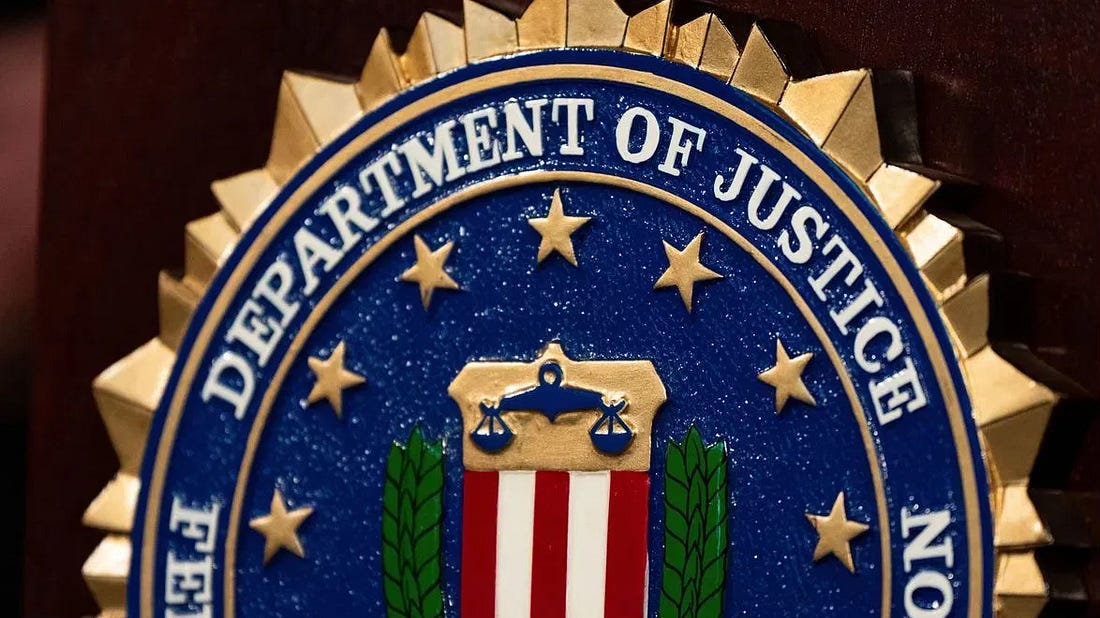
FBI Foils Alleged ISIS-Inspired Mass-Shooting Plot in Pennsylvania as Suspect Was Making ‘Final Preparations’Federal agents tracked the 21-year-old to a Pennsylvania hotel after he allegedly obtained a rifle, five magazines and roughly 190 rounds.
Federal agents say they disrupted an alleged ISIS-inspired terror plot in Pennsylvania after a 21-year-old suspect reportedly obtained a rifle, ammunition and other equipment while preparing for what he called his “mission.” Jonathan Hunter Kramer was arrested after FBI agents tracked him to a hotel in Cranberry Township, Pennsylvania, according to the Department of Justice. Federal prosecutors allege Kramer had acquired a semiautomatic rifle, five magazines and roughly 190 rounds of ammunition before agents intervened. Authorities have not publicly identified a specific target. But investigators say Kramer’s actions in the days leading up to his arrest — including purchasing a disposable phone, obtaining a long black bag and checking into a hotel using cash — raised concerns that preparations for a possible attack were accelerating. Attorney General Todd Blanche credited federal agents with intervening before anyone was harmed. FBI Director Kash Patel said investigators acted while Kramer was allegedly acquiring weapons and developing potential attack concepts in support of ISIS. Kramer has now been charged by federal criminal complaint with receiving a firearm and ammunition while knowing, or having reasonable cause to believe, that they would be used to commit a felony or federal terrorism offense. FBI Had Been Tracking KramerAccording to the criminal complaint, Kramer had previously come to the FBI’s attention during an investigation in 2023, when he was still a minor. Federal prosecutors say Pennsylvania authorities subsequently charged Kramer and adjudicated him delinquent over his alleged involvement in a separate mass-casualty plot and possession of child sexual abuse material. After Kramer was released from juvenile detention in 2026, investigators reportedly received an anonymous tip warning that he had returned to troubling behavior. The tip allegedly referenced mysterious packages arriving for Kramer and renewed contact with individuals associated with his earlier activities. Investigators say Kramer later operated online under the name “Hamza Al Rashid,” claimed an affiliation with ISIS and offered to distribute explosives manuals. Most significantly, prosecutors allege Kramer wrote that he was preparing for his “mission” but still needed a “weapon.” Agents Move InThe investigation intensified on September 12. Agents allegedly watched Kramer leave his home carrying a bag before taking a rideshare to a store and purchasing a disposable phone. He then reportedly met another individual in a parking lot, retrieved a long black bag from a vehicle and traveled to a hotel. Witnesses told investigators that the bag produced a metallic clicking sound when Kramer placed it down. After checking into the hotel, Kramer allegedly traveled to a sporting-goods store and was observed near the gun counter. Federal agents intercepted him when he returned to the hotel carrying shopping bags. Searches of Kramer, his hotel room and his residence allegedly uncovered a semiautomatic rifle, five magazines, approximately 190 rounds of ammunition, a rifle scope and bipod, pepper spray, an entrenchment tool and roughly 30 knives. Investigators also reported discovering a handwritten note in which Kramer told others not to look for him and wrote that he could no longer live in constant fear. Federal authorities contend that the evidence points to an alleged terror plot that was moving beyond online rhetoric and toward potential action. Kramer made his initial appearance in federal court Monday, and prosecutors requested that he remain jailed without bond on the grounds that he poses a danger to the community. The case highlights the continuing concern among federal authorities over ISIS-inspired radicalization inside the United States, even years after the terrorist organization lost most of the territory it once controlled in Iraq and Syria. In this case, investigators say an anonymous tip helped put the FBI on Kramer’s trail before the alleged preparations could progress further. Kramer has been charged, not convicted. The allegations against him are contained in a federal criminal complaint, and he is presumed innocent unless proven guilty in court. |

You received this message because you are subscribed to the Google Groups "SkipsList" group.
To unsubscribe from this group and stop receiving emails from it, send an email to skipslist+unsubscribe@googlegroups.com.
To view this discussion visit https://groups.google.com/d/msgid/skipslist/CACTjsm0wdWEvZSwLKHHa%3DYRrB165ZSY%2Bf3RaSa9uSKkVnwBCaQ%40mail.gmail.com.


No comments:
Post a Comment
Note: Only a member of this blog may post a comment.